How to Move From Idea to First Prototype
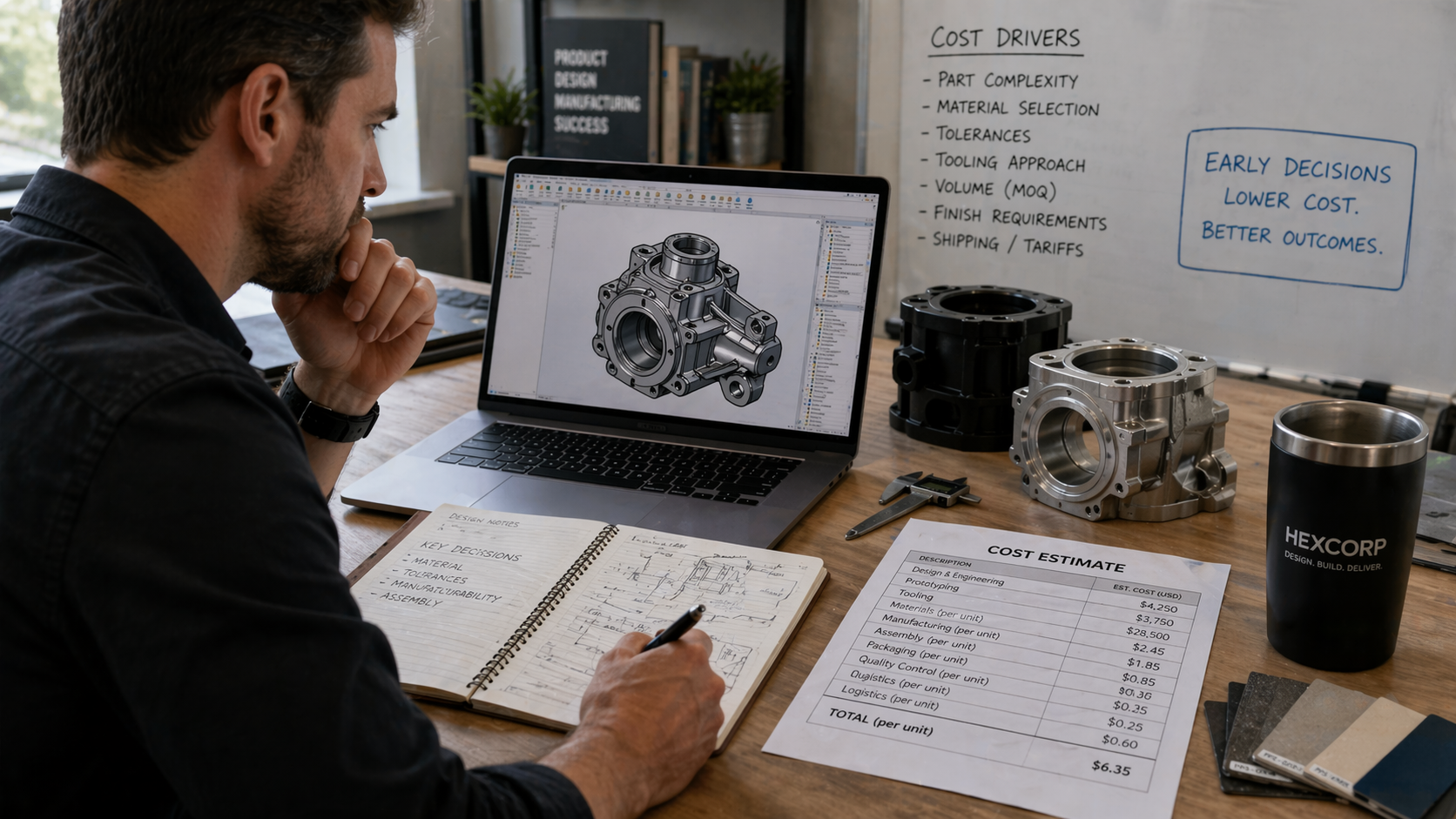
A founder hands a contract manufacturer a sketch and a target unit price of fourteen dollars. The manufacturer comes back with a quote anchored on forty. The founder assumes something has gone wrong with the math. The math is fine. The wall thickness, the draft angles, and the tolerance band on three of the moving parts were all set during sketching, none of it was costed at the time, and the gap shows up at manufacturing.
This is where most product ideas slow down or stop. The decisions that determine what an idea costs to actually exist tend to land before any physical part is built, and most of them have very little to do with how creative or ambitious the original concept was. Material selection, manufacturability, tolerance budgets, and assembly logic all surface during the run-up to a prototype, and each one shapes what every later stage will cost.
Founders who get past this stage usually do it by treating the work between concept and first part as a sequence of decisions, each of which deserves its own attention. The ones who treat the same work as a single creative leap usually pay for it twice.
From Idea to a File a Manufacturer Can Quote
The first work in product development happens before any software opens. It happens at the level of language. An idea has to be defined well enough that a designer or engineer can act on it without guessing at what the inventor meant.
Most concepts start as something that makes sense internally and gets harder to communicate the moment a stranger reads it. Turning that concept into a one-paragraph problem statement, a few rough sketches, and a short list of constraints surfaces the gaps. The questions that come back from a designer here are usually the same ones a manufacturer will ask three months later: who will use the product, how often, in what environment, and what does “good enough” mean for each part of it.
The cost of skipping this stage is small in week one and large in week twelve. A definition that looked obvious at the start of the project is often the first thing that gets rewritten when manufacturing realities catch up.
Where Design Becomes a Set of Cost Decisions
Once the idea holds together as a problem statement, the next stage is engineering. CAD modeling translates the concept into geometry, dimensions, materials, tolerances, and assembly logic. The dollar value of the engineering work itself is usually a fraction of what the engineering work commits the rest of the project to.
A handful of choices made here quietly shape every later phase. Material selection drives unit cost and how the product holds up over time. Tolerances determine whether parts can be made consistently or only assembled by hand. Component count drives assembly time, which is one of the largest variables in long-run unit cost. Each of those reads on the surface as a design decision and behaves more like a budget commitment.
A design that works on paper can still need adjustments to make it practical for production. Experienced product teams evaluate not just how the design looks, but how it’ll actually be built, which materials are even achievable at the specified tolerances, and where the cost bottlenecks will end up. The prototype that follows a well-engineered design produces useful information. The prototype that follows a sketchy design tends to confirm what the founder already believed.
Building the First Prototype
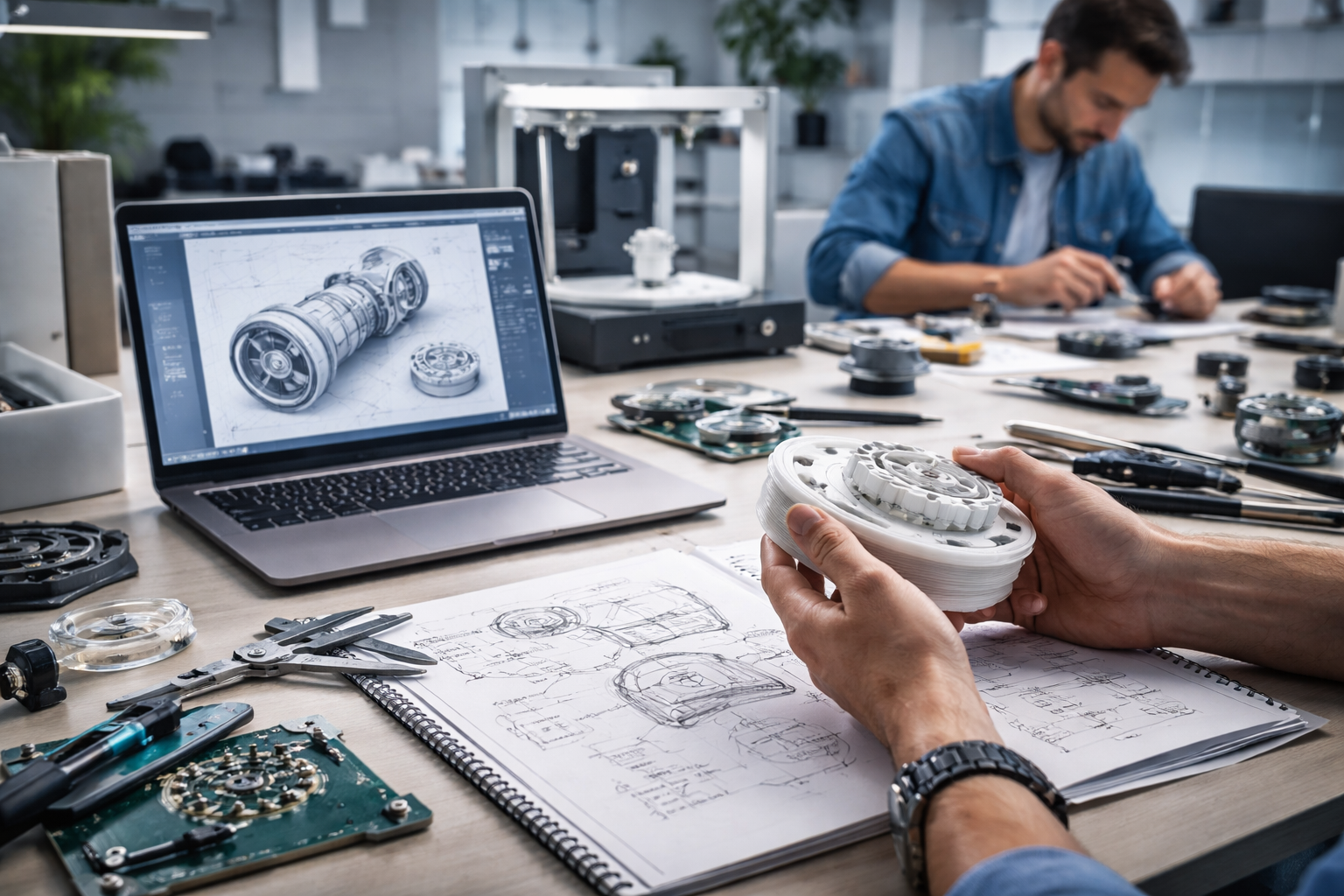
With a workable design in hand, the first physical prototype can be built. Early prototypes are commonly produced through 3D printing, CNC machining, soft tooling, or fabrication. The right method depends on the product, the volume target, and what the prototype is meant to validate.
A first prototype is supposed to produce information. It reveals how the product feels in the hand, how the parts interact when actually assembled, and where the design will need to flex. Materials behave differently than the spec sheet suggests. Parts stack up tolerances in ways the CAD model couldn’t predict. Mechanisms that looked clean in software develop friction when machined.
Founders who treat the prototype as a learning instrument tend to come away with a list of the next things to test. Founders who treat it as proof of concept tend to come away with a slightly polished version of what they already assumed.
Refining the Design Before Tooling Locks It In
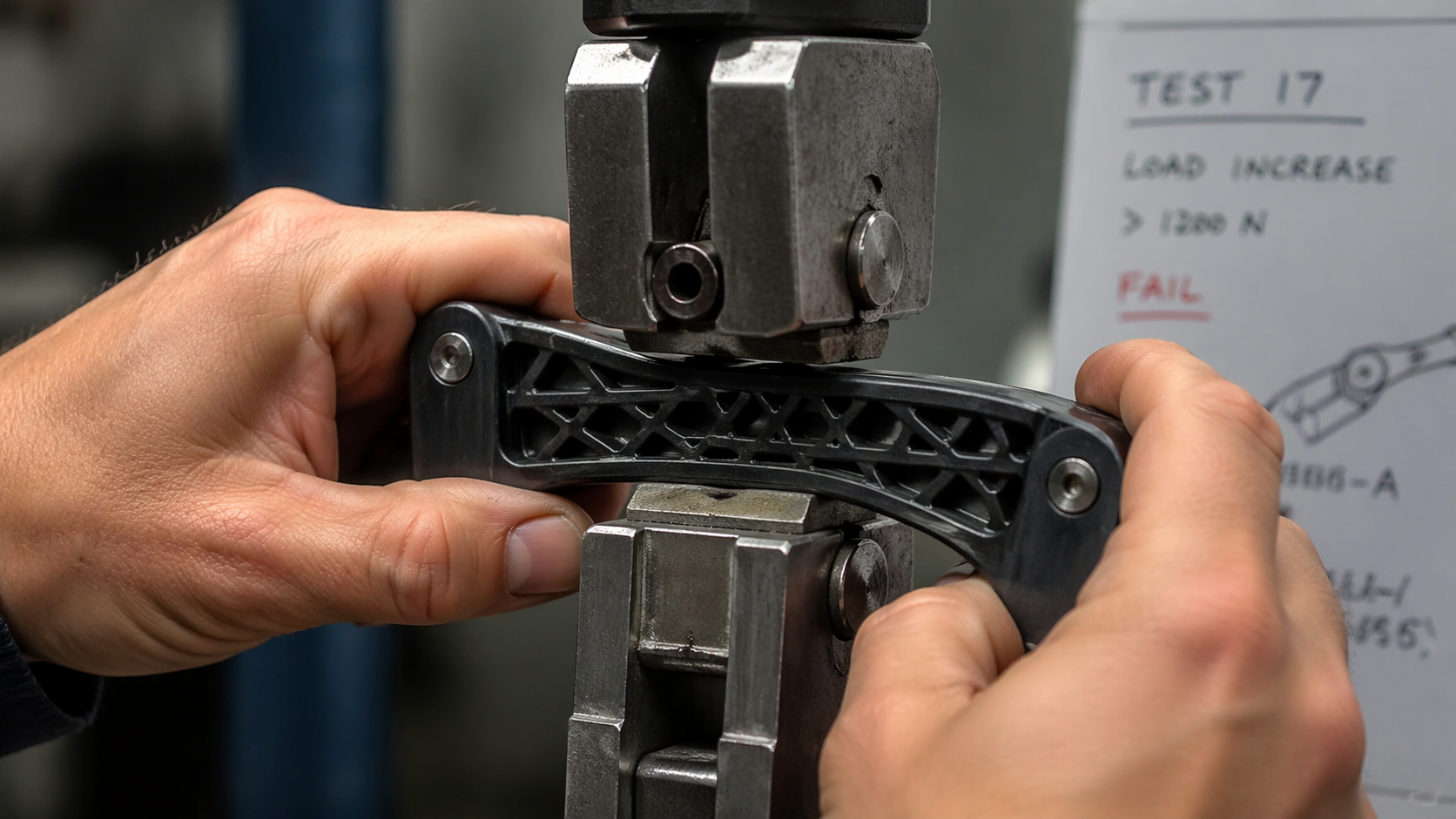
The first prototype is rarely the last. Most successful products go through several rounds of refinement before the design holds still long enough to commit to manufacturing. The founders who reach that point quickly are usually the ones who built the prototype expecting changes.
Some changes that come out of this phase improve user experience. Others simplify manufacturing. A meaningful fraction of them reduce long-run unit cost in ways that pay back the entire prototyping budget several times over. After 25 years of working with founders moving from concept to production, the value of the prototype phase is almost always concentrated in the second and third versions, not the first.
This is the last phase where changes are still cheap. Once tooling is cut or production commitments begin, the same changes start measuring in weeks and tens of thousands of dollars. The arithmetic from this point onward gets harder.
Why the Sequence Matters
Every successful product begins as an idea, and the ideas that reach the market all move through some version of this same sequence: a problem defined clearly enough to be acted on, a design that survives contact with manufacturing, a prototype built to be informative, and a refinement loop that finishes before tooling commits the budget. Skipping any one of these is the most common way an early-stage product runs out of momentum.
Founders who keep their original idea mostly intact through this sequence are usually the ones who treated the work between sketch and prototype as serious work, rather than as logistics on the way to building.
The cheapest place to find out whether a concept is ready for a first prototype is before that prototype gets ordered. HexCorp’s free 20-minute consultation is built for that conversation specifically: an outside read on what the design has actually decided, before tooling locks any of it in.
Phone: (818) 530-7900
Email: Contact@HexCorp.com
Website: https://www.hexcorp.com
No pressure. Just clarity.