How Product Development Costs Actually Get Set
A founder asks what her product development costs will be. She has a number in her head, somewhere around forty thousand dollars, and she wants to know if that covers the path to market. The honest answer is it depends on five or six choices she hasn’t made yet, and most of them aren’t what she’s been worrying about.
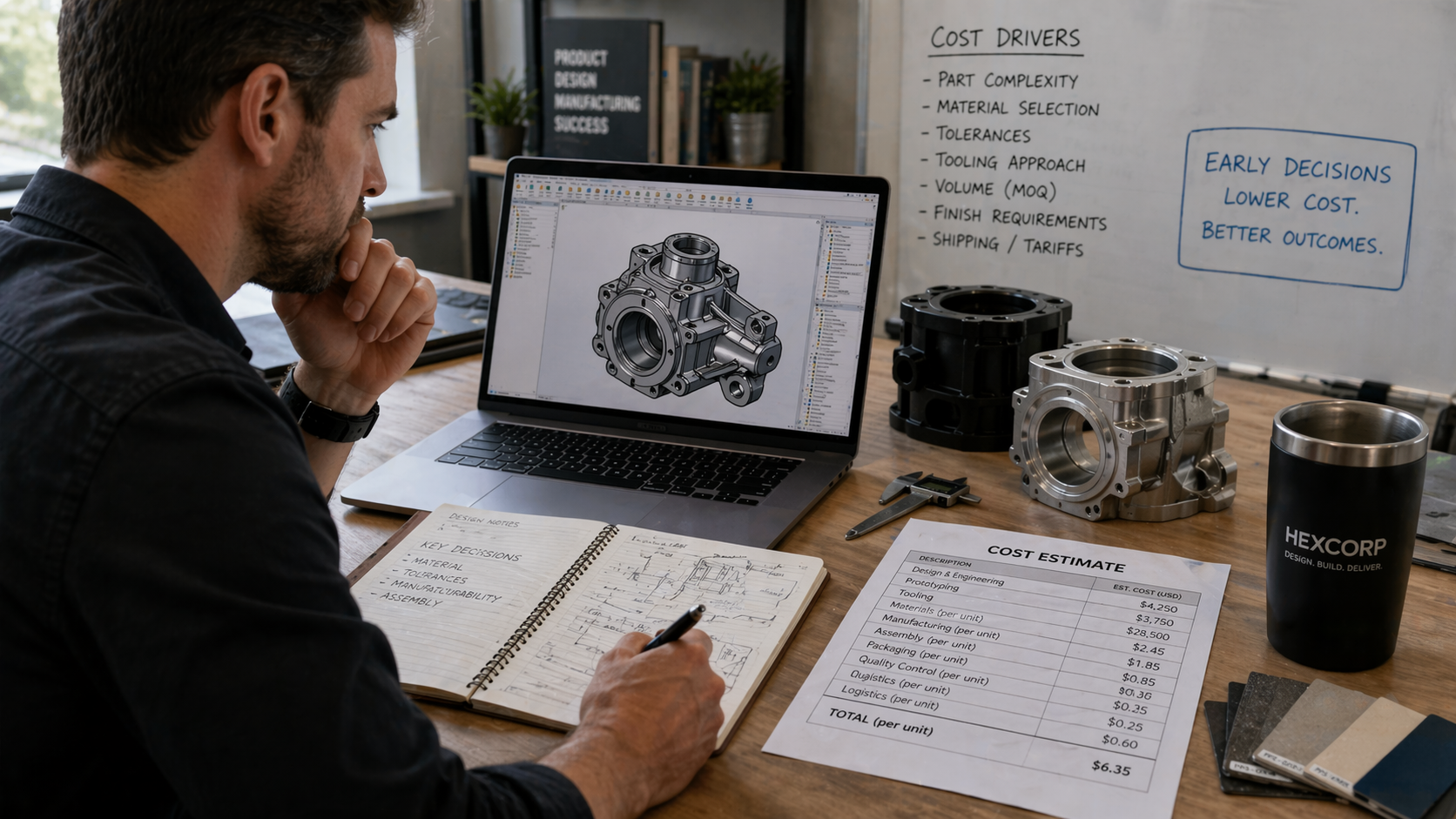
Product development cost is a chain of dependent decisions, not a single quote. Design choices shape the production setup you’ll need. That setup shapes per-unit cost. Per-unit cost decides whether you can sell the product profitably at the price you have in mind. Small choices early in the chain move the entire budget. The founders who run out of money before launch usually didn’t blow the production estimate. They got the early decisions wrong.
Where the Budget Actually Gets Set
The first money goes into design and engineering. Most people picture CAD models and material selection. That’s accurate, but it misses the part that shapes the budget. Every choice made in this phase is also a choice about what the product will cost to make later.
Tight dimensional specs cost more to hold than loose ones. A housing that snaps together saves real money on assembly. Single-source materials look fine until scaling forces a price increase nobody saw coming. None of that shows up in the design fee. All of it shows up on the manufacturing invoice eighteen months later.
A simple mechanical product might wrap design in a few weeks. A product with electronics, moving parts, or strict regulatory needs runs several months and several rounds. The number that matters more than the design fee is the manufacturability of what the product design phase produces.
What an Early Build Buys You
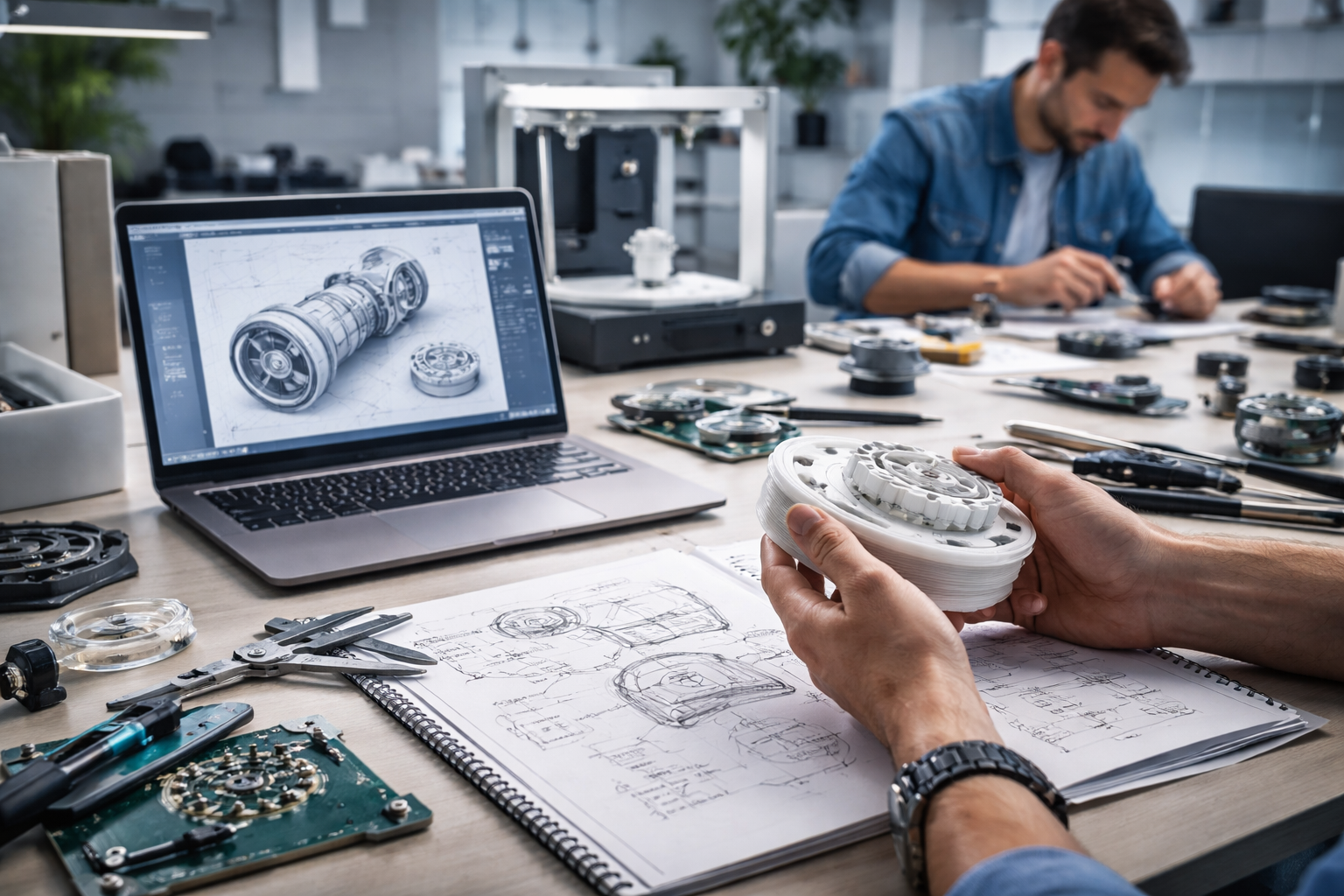
Once the design is solid, the next investment is an early build. A working version meant to be touched, dropped, used, and revised. For a mechanical product, the first version might come off a 3D printer. Something that needs to mimic production behavior may call for CNC parts or soft tooling.
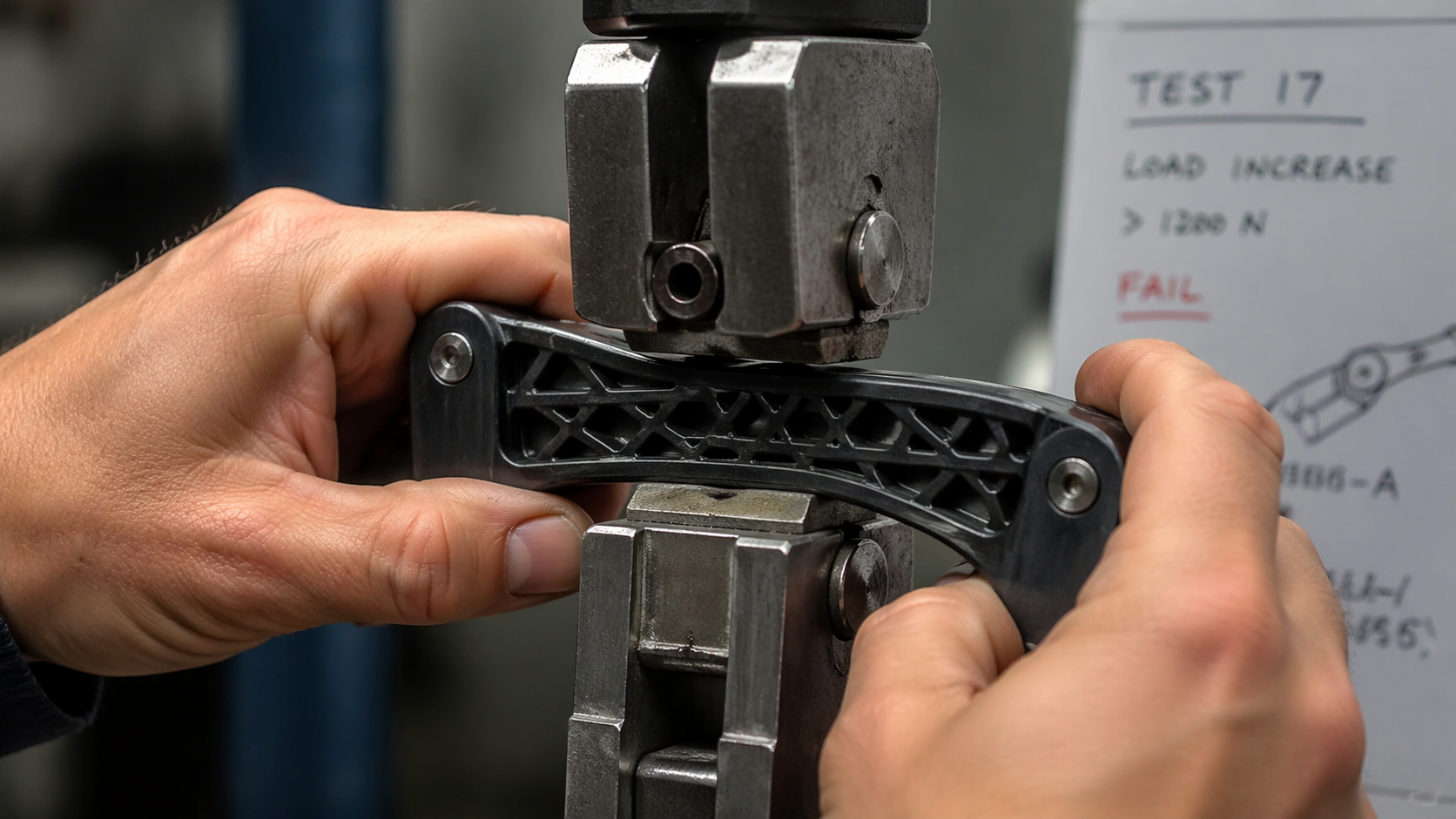
Almost no product gets it right on the first build. Its job is to expose the things nobody saw on the screen. The button that’s harder to press than it looked, the assembly step that takes forty minutes when it should take five, the part that warps in heat. Those are the kinds of discoveries that justify the spend on rapid prototypes and early manufacturing.
Founders trying to save money sometimes skip this step or rush it. The savings are real for about three months. After that, the same problems resurface during production, where fixing them costs ten or twenty times more. The first build is the cheapest place to find out what’s wrong with the design.
The Bill Before the First Unit Ships
After the design has survived a few rounds of real-world testing, the next big check goes to manufacturing setup. Injection molds, custom fixtures, jigs, and dedicated equipment usually have to exist before a single production unit gets made. This is almost always the largest single number in the development budget.
The size of that number depends on the product. A simple molded part may need one cavity in a low-volume mold. A complex consumer device may need multiple molds, custom fixtures, automated assembly stations, and a quality check rig. The range is wide enough that founders can’t accurately estimate it without a real conversation with a manufacturer.
This is also the stage where design choices come back to either help or hurt. A part with three internal undercuts needs a more expensive mold than the same part redesigned to draft cleanly. The decisions made eighteen months earlier in the design phase are paying their bill here, with interest.
What Each Unit Has to Earn
Once setup is complete, the math changes. Spending shifts from development to per-unit cost. Materials, labor, assembly time, packaging, inbound and outbound shipping, defect rates, returns. Each line is a fraction of what the product can be sold for.
This is where products built without per-unit thinking quietly fall apart. A device that costs eleven dollars to manufacture sounds great on paper. Then packaging adds three, shipping adds four, a defect rate of two percent eats another forty cents, and the retailer wants a fifty percent margin. The math gets tight quickly.
The founders who plan for this from the start aren’t smarter than the ones who don’t. They’re just willing to do the boring math early, before anything is locked in. A product that works in the lab and loses money on every unit doesn’t survive its second year.
Almost none of this is in a quote when a founder first asks the cost question. The number a manufacturer gives is real, but it’s tied to assumptions about the design, the materials, the volume, the packaging, and a dozen other things that haven’t been decided. Knowing where the cost is hiding is what protects the budget.
If you’re between an idea and your first production run, book a free 20-minute call with HexCorp. You’ll get a read on which decisions ahead of you are the expensive ones to get wrong, and which ones can wait. After 25 years of building products with founders, that conversation usually saves more than it costs.
Phone: (818) 530-7900
Email: Contact@HexCorp.com
Website: https://www.hexcorp.com