If you are trying to turn an idea into a real, physical product for the first time, the early stage often feels encouraging. You send drawings or concepts to a few manufacturers. Most respond quickly. Many say the same thing:
Yes, we can build this.
At first, that confidence feels like progress. But once the project moves forward, reality often sets in. Costs change. Timelines stretch. Design decisions you did not realize were permanent suddenly are. That is usually when people discover a hard truth for the first time:
Many manufacturers can make parts. Far fewer help you make good decisions.
The difference is not obvious at the beginning. It only becomes clear after time and money are already committed. This article explains how to spot that difference early, and how to choose a manufacturing partner who helps you avoid expensive mistakes, not just build the first version.
Manufacturing Is Not a Final Step
Many first-time product builders think of manufacturing as something that happens after design is finished. In reality, manufacturing decisions quietly influence everything that follows:
- Unit cost
- Scalability
- Reliability
- Lead time
- Whether the product makes financial sense at all
That is why the most important factor is not where something is made or how fast it can be produced. It is how your manufacturing partner thinks.
Some manufacturers focus only on execution. Others think about the full product lifecycle. Both exist for valid reasons, but they serve very different needs.
Parts Builders vs Product Thinkers
A parts-focused manufacturer works from one assumption: the drawing is correct. Their job is to build exactly what is specified. If the part meets the dimensions and tolerances on paper, the job is considered successful.
This works well when designs are proven, volumes are stable, and risk is low.
The problem is that early-stage products rarely meet those conditions.
When a design includes hidden issues such as unclear tolerances, material choices that complicate assembly, or features that drive unnecessary cost, a parts-only manufacturer will still build it. The risks do not disappear. They simply move downstream, where they become far more expensive to fix.
A product-thinking manufacturer approaches the same drawing differently. They look at how the product will be used, where it might fail, and how today’s decisions affect cost and manufacturability later. They ask questions not because the design is wrong, but because real-world use almost always reveals things drawings do not.
That mindset difference alone can determine whether a project moves forward smoothly or gets stuck in rework.
Experience Shows Up Before Problems Do
Machines can be purchased. Software can be licensed. What cannot be bought is experience.
Experience shows up quietly. It appears as hesitation when something looks simple but is not. It shows up as warnings about issues that have not happened yet, but often do. It shows up in knowing which shortcuts are harmless and which ones create long-term problems.
Manufacturers with real experience have lived through warped parts, tolerance stack-ups, tooling that had to be scrapped, and products that failed despite looking fine on paper. That history changes how they guide clients.
Instead of reacting to problems after they happen, they help prevent them from happening in the first place..
If You Do Not Understand the Explanation, Pause
You should understand your own product well enough to make informed decisions. If a manufacturing partner cannot explain their recommendations in plain language, that is a warning sign.
Clear explanations are not about simplifying the work. They are about making tradeoffs visible. Good partners explain why one option costs more, what risks come with each choice, and which decisions are difficult to reverse later.
When explanations are vague or buried in jargon, it often means the focus is on moving forward quickly, not on making sure the direction is right.
Confusion does not speed projects up. It delays them, usually after money has already been spent.
One Size Rarely Fits All
Every product carries different constraints. Some are cost-sensitive. Others prioritize appearance, durability, or speed to market. When a manufacturer applies the same process to every project, those differences get ignored.
That is when unnecessary cost creeps in. Products become overbuilt. Tooling is ordered too early. Production methods are locked before designs are validated.
Strong manufacturing partners adjust their approach based on uncertainty. When questions remain, they recommend steps that preserve flexibility. When risk is high, they suggest short runs before scale. This does not slow progress. It protects it.
Honest Cost Conversations Matter Early
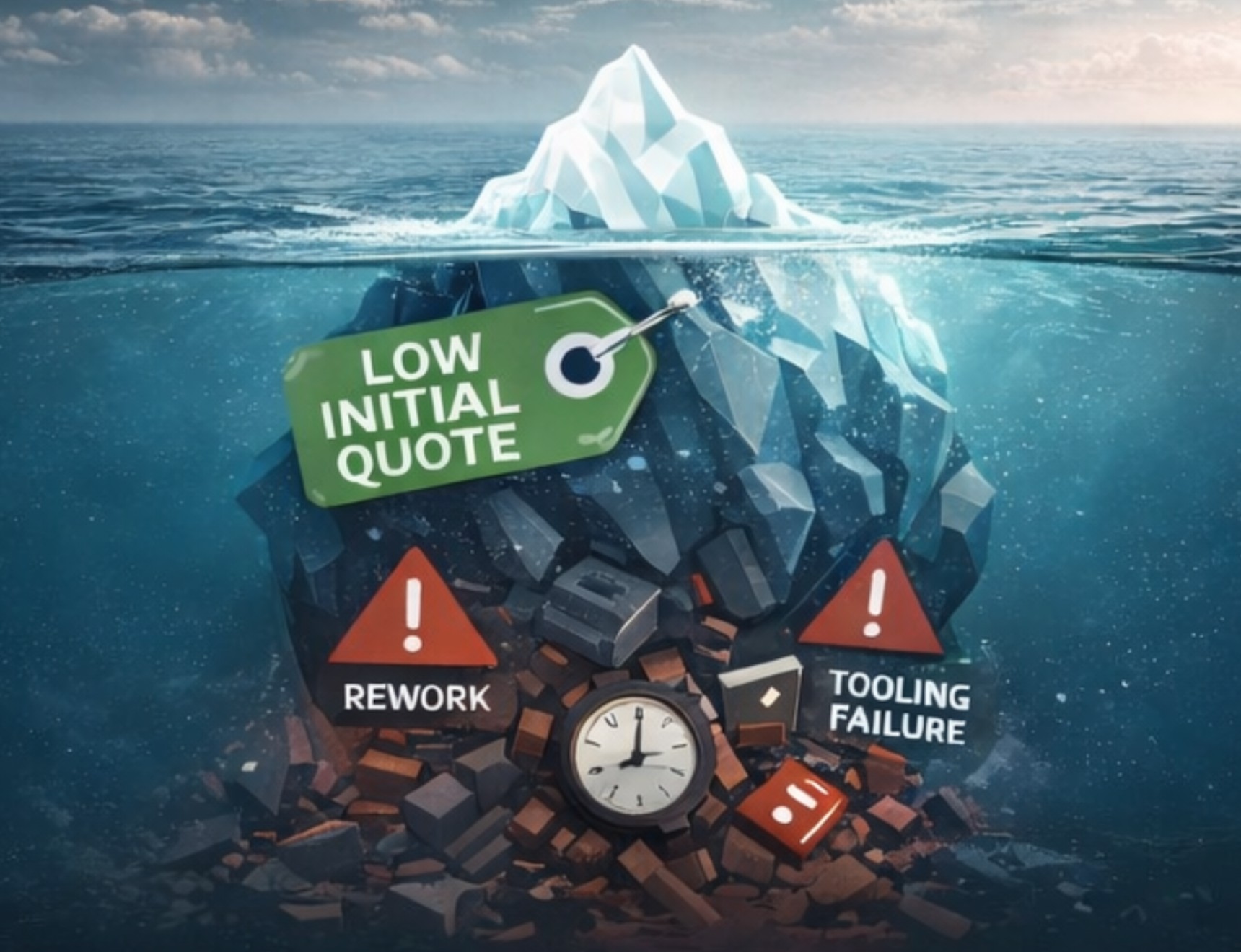
Manufacturing cost is more than per-unit pricing. Tooling, revisions, scrap, yield loss, assembly inefficiencies, and logistics all contribute to the real cost of a product.
Some manufacturers focus on winning work with an attractive initial quote, knowing additional costs will surface later. Others discuss those realities upfront.
Honest cost conversations clarify assumptions. They explain what is included, what might change, and which decisions drive cost the most. That transparency allows better decisions while changes are still affordable.
Choosing the Right Partner Early Saves the Most
The best manufacturing partners do not promise speed above all else. They know when slowing down briefly avoids major rework later. They flag decisions that lock designs too early and recommend approaches that keep options open.
Choosing a manufacturing partner is not about finding someone who says yes. It is about finding someone who helps you understand when yes is the right answer.
How HexCorp Helps
HexCorp works with first-time product builders and growing companies to bridge the gap between idea and reality. We help clients understand cost, manufacturability, and risk before irreversible decisions are made.
If you want clarity before committing, we offer a free 20-minute initial consultation to review your project and discuss next steps.
Phone: (818) 530-7900
Email: contact@hexcorp.com
Website: https://www.hexcorp.com