Your Product Idea Could Be the Next Big Thing
If It Meets These 3 Criteria!
Before you launch, ask yourself: is my product ready for the real world?
Early product ideas almost always feel solid at first. You sketch something out, maybe build a rough model, and even get an initial quote. You might send it to a few manufacturers, walking away feeling like you’ve made a real step forward.
That’s the moment when people get ahead of themselves. Because what feels like momentum is often just early encouragement, not proof that the idea actually works in the real world.
At HexCorp, after 25 years of product design and manufacturing, the difference between ideas that scale and ideas that stall is rarely about creativity. It usually comes down to whether the idea survives three basic reality checks before money gets committed.
Does the Problem Exist Beyond You
A product only works if it solves a problem that already exists in the real world. It’s not a hypothetical inconvenience or something that sounds clever in conversation. It has to be a real problem that people are already trying to solve.
Early-stage founders often mistake personal frustration for market demand. They assume that because something bothers them, it must bother enough people to justify a product. That assumption is where time and money quietly slip away.
If people aren’t actively trying to solve the problem today, you are not improving an existing behavior. You are trying to create a new one. That is significantly harder, more expensive, and far less predictable.
The consequence of getting this wrong isn’t just low sales. It’s wasted development cycles, unnecessary prototyping, and sunk costs before the product ever reaches a real user.
A viable product doesn’t introduce a problem. It enters an existing one and solves it better.
Can It Be Built at a Real Cost
This is where a lot of first-time builders hit a wall.
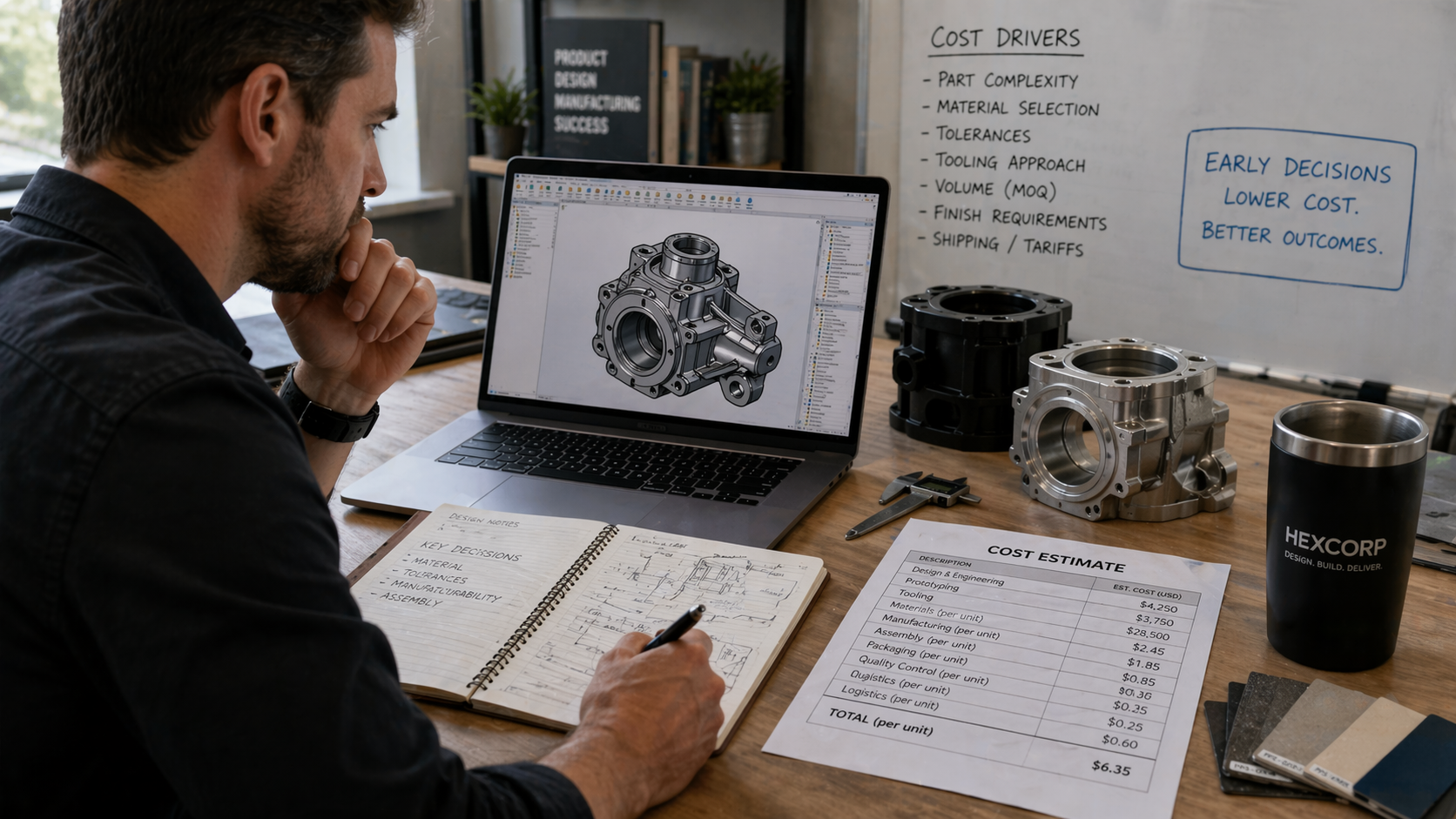
A manufacturer might say it’s buildable, but that doesn’t mean the numbers make sense. Once you factor in tooling, minimum order quantities, shipping, and assembly, costs start stacking fast.
What looked like a $12 product on paper can quietly turn into $25–$30 per unit in reality.
And that gap matters.
If your pricing doesn’t leave room for margin after everything is accounted for, the product doesn’t work as a business, no matter how well it functions.
This is why cost decisions early on matter more than most people expect. Small design choices at the beginning can lock you into cost structures that are hard to fix later.
Understanding manufacturability early prevents expensive redesigns and avoids committing to a version of the product that cannot scale.
Will It Hold Up in Real Use
A product that works once isn’t a product. It’s a demonstration.
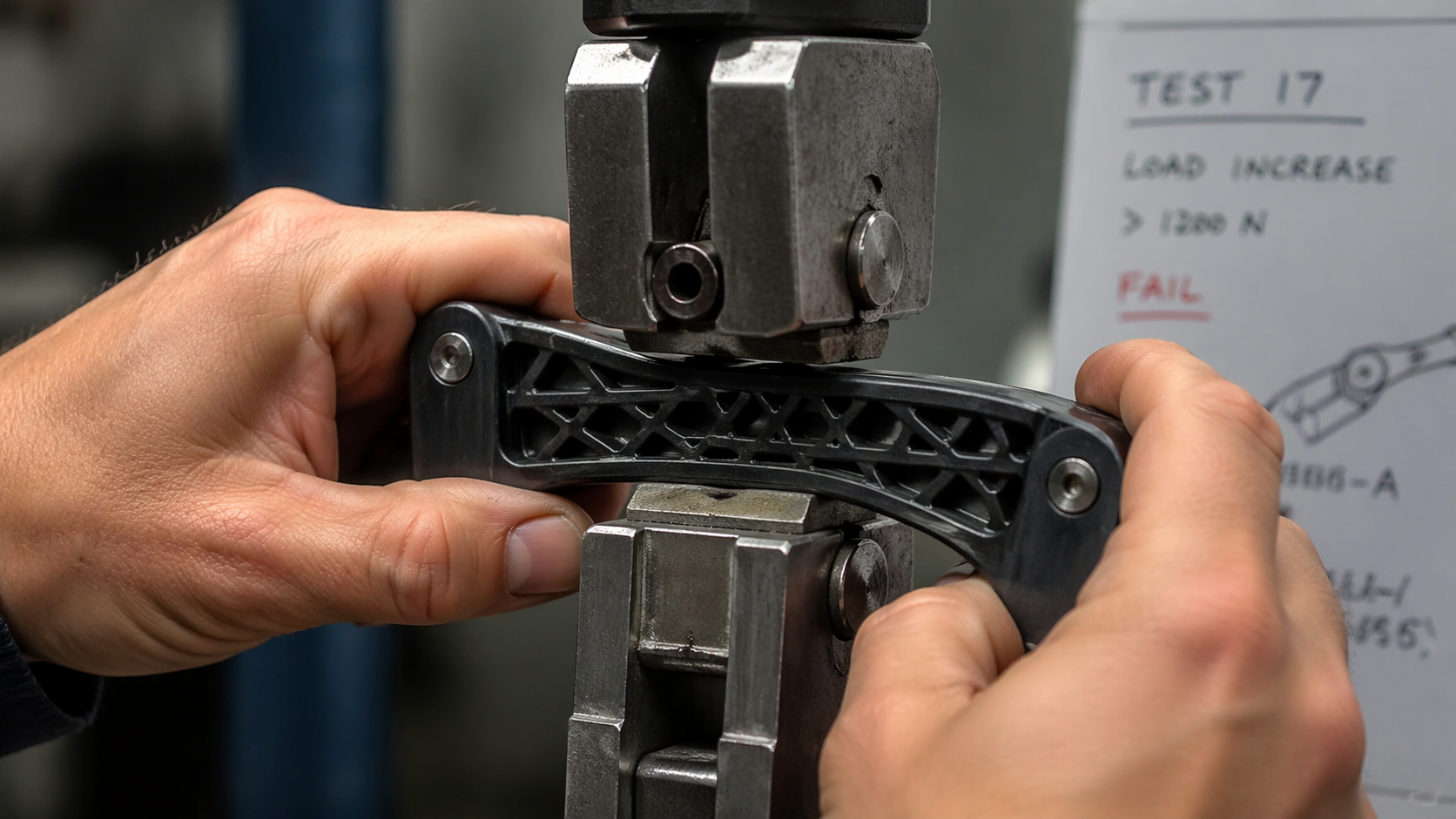
Durability, repeatability, and user interaction are where many ideas break down. What functions in a controlled environment often fail under real-world conditions.
Materials behave differently over time, and mechanical parts wear. Users apply force in unexpected ways. Assembly tolerances stack and create failure points that were not obvious in early prototypes.
If the product can’t survive consistent use, it will generate returns, complaints, and reputational damage. Fixing those issues after production begins is significantly more expensive than addressing them during development.
Testing for real-world use isn’t optional. It’s a filter that determines whether the product can exist outside of a prototype.
Does the Design Lock You Into the Wrong Path
Every design decision creates constraints. Some of those constraints aren’t obvious until later.
Choosing a specific manufacturing method too early can limit your ability to reduce costs. Selecting materials without considering supply chain availability can create delays. Designing around a single factory’s capability can reduce flexibility when scaling.
These are not theoretical risks. They’re common outcomes when decisions are made without understanding long-term implications.
Once tooling is created or production is started, changing direction becomes expensive. In some cases, it becomes impractical.
The goal at the early stage isn’t to finalize the design. It’s to keep options open while validating the core assumptions of the product.
What Actually Matters Before You Move Forward
A product idea isn’t validated when it’s built. It’s validated when it solves a real problem, can be produced at a practical cost, and performs well consistently in real-world conditions.
Most failures happen because these variables were assumed instead of being tested.
Clarity at this stage is more valuable than speed. Moving forward without it usually leads to rework, delays, and unnecessary expense.
If there’s one question worth asking before you invest further, it’s this: are you validating your idea against reality, or just confirming that it sounds good on paper?
HexCorp offers a free 20-minute consultation to help you evaluate your product before making manufacturing decisions.
(818) 530-7900
Contact@HexCorp.com
https://www.hexcorp.com/